Criminal markets
3.630.06
An assessment of the value, prevalence and non-monetary impacts of a specific crime type.
Human trafficking
5.500.00
Illicit activity involving coercion, deception, abduction or fraud for the purpose of exploitation, regardless of the victim’s consent.
Human smuggling
3.50-0.50
Activities by an organized crime group involving the illegal entry, transit or residence of migrants for a financial or material benefit.
Extortion and protection racketeering
1.50-1.50
Crimes linked to exerting control over a territory/market including as a mediator and/or requesting a benefit in exchange for protection.
Arms trafficking
2.00-0.50
The sale, acquisition, movement, and diversion of arms, their parts and ammunition from legal to illegal commerce and/or across borders.
Trade in counterfeit goods
4.000.50
The production, transport, storage and sale of goods that are fraudulently mislabeled or fraudulent imitations of registered brands.
Illicit trade in excisable goods
3.500.50
The illicit transport, handling and sale of excise consumer goods despite a ban or outside a legal market. Excludes oil and counterfeits.
Flora crimes
3.500.00
The illicit trade and possession of species covered by CITES convention, and other species protected under national law.
Fauna crimes
4.500.50
The poaching, illicit trade in and possession of species covered by CITES and other species protected by national law. Includes IUU fishing.
Non-renewable resource crimes
2.000.00
The illicit extraction, smuggling, mingling, bunkering or mining of natural resources and the illicit trade of such commodities.
Heroin trade
3.00-0.50
The production, distribution and sale of heroin. Consumption of the drug is considered in determining the reach of the criminal market.
Cocaine trade
3.500.00
The production, distribution and sale of cocaine and its derivatives. Consumption is considered in determining the reach of the market.
Cannabis trade
3.500.50
The illicit cultivation, distribution and sale of cannabis oil, resin, herb or leaves. Consumption is used to determine the market's reach.
Synthetic drug trade
5.500.50
The production, distribution and sale of synthetic drugs. Consumption is considered in determining the reach of the market.
Cyber-dependent crimes
4.501.00
Organized crimes that rely solely on using information communications technology with the aim of obtaining a monetary/material benefit.
Financial crimes
4.500.50
Organized crime that results in a monetary loss via financial fraud, embezzlement, misuse of funds, tax evasion and abusive tax avoidance.
Criminal actors
5.20-0.10
An assessment of the impact and influence of a specific criminal actor type on society.
Mafia-style groups
5.500.00
Clearly defined organized crime groups that usually have a known name, defined leadership, territorial control and identifiable membership.
Criminal networks
5.000.00
Loose networks of criminal associates engaging in criminal activities who fail to meet the defining characteristics of mafia-style groups.
State-embedded actors
4.00-0.50
Criminal actors that are embedded in, and act from within, the state’s apparatus.
Foreign actors
6.500.00
State and/or non-state criminal actors operating outside their home country. Includes foreign nationals and diaspora groups.
Private sector actors
5.000.00
Profit-seeking individuals/entities who own/control a part of the legal economy free from the state, that collaborate with criminal actors.
Political leadership and governance
8.50-0.50
The State's role in responding to organized crime and its effectiveness. Strong political leadership/governance suggests higher resilience.
Government transparency and accountability
7.50-0.50
The degree to which states have put oversight mechanisms in place to ensure against state collusion in illicit activities.
International cooperation
8.500.00
A country's supranational structures and processes of interaction, policy making and concrete implementation to respond to organized crime.
National policies and laws
9.000.00
A state's legal action and structures put in place to respond to organized crime.
Judicial system and detention
8.50-0.50
Refers to a state’s judiciary’s power to effectively and independently enforce judgments on organized crime-related cases.
Law enforcement
8.000.00
The state’s ability to investigate, gather intelligence, protect and enforce adherence to its rules and procedures against organized crime.
Territorial integrity
8.000.50
The degree to which states are able to control their physical and cyber territory and infrastructure against organized criminal activities.
Anti-money laundering
8.000.00
A state’s ability to implement measures to combat money laundering and other related threats to the integrity of its financial system.
Economic regulatory capacity
7.000.00
The ability to control/manage the economy and regulate transactions (national and international) for trade to thrive within the rule of law.
Victim and witness support
7.000.00
Assistance provided to victims of various forms of organized crime, including initiatives such as witness protection programs.
Prevention
8.000.00
Refers to the existence of strategies, measures, resource allocation, programmes and processes that are aimed to inhibit organized crime.
Non-state actors
8.000.00
The degree non-state actors are allowed to engage in OC responses and their roles in supporting State efforts/ as watchdogs to governments.
Political leadership and governance
8.50-0.50
The State's role in responding to organized crime and its effectiveness. Strong political leadership/governance suggests higher resilience.
Government transparency and accountability
7.50-0.50
The degree to which states have put oversight mechanisms in place to ensure against state collusion in illicit activities.
International cooperation
8.500.00
A country's supranational structures and processes of interaction, policy making and concrete implementation to respond to organized crime.
National policies and laws
9.000.00
A state's legal action and structures put in place to respond to organized crime.
Judicial system and detention
8.50-0.50
Refers to a state’s judiciary’s power to effectively and independently enforce judgments on organized crime-related cases.
Law enforcement
8.000.00
The state’s ability to investigate, gather intelligence, protect and enforce adherence to its rules and procedures against organized crime.
Territorial integrity
8.000.50
The degree to which states are able to control their physical and cyber territory and infrastructure against organized criminal activities.
Anti-money laundering
8.000.00
A state’s ability to implement measures to combat money laundering and other related threats to the integrity of its financial system.
Economic regulatory capacity
7.000.00
The ability to control/manage the economy and regulate transactions (national and international) for trade to thrive within the rule of law.
Victim and witness support
7.000.00
Assistance provided to victims of various forms of organized crime, including initiatives such as witness protection programs.
Prevention
8.000.00
Refers to the existence of strategies, measures, resource allocation, programmes and processes that are aimed to inhibit organized crime.
Non-state actors
8.000.00
The degree non-state actors are allowed to engage in OC responses and their roles in supporting State efforts/ as watchdogs to governments.
Human trafficking remains a prominent issue in the Republic of Korea (South Korea), which serves as both a destination and source country. Victims include South Korean nationals and people from countries such as China, Thailand, Vietnam and the Philippines. These individuals are subjected to sex trafficking and forced labour, often entering South Korea on tourist visas and becoming vulnerable to exploitation because of economic need. Traffickers employ coercion, including debt bondage and threats of exposure, and exploit vulnerabilities in labour and visa frameworks. Sex trafficking is particularly prevalent in establishments such as karaoke salons, massage parlours and bars, with digital sex trafficking increasingly occurring through online platforms and social media. Victims, including minors, are coerced into producing explicit content under threats. In rural areas, women from abroad are also exploited in marriage-based trafficking. Labour trafficking, especially aboard South Korean-flagged fishing vessels, exposes South East Asian and disabled South Korean men to exploitative conditions, including withholding wages and prolonged periods at sea.
South Korea is also a destination for human smuggling in the region. Individuals from Thailand, Vietnam, China and Russia frequently enter the country on group tourist visas, only to remain illegally for employment in sectors such as fishing and agriculture. While there is no evidence directly linking visa overstays to smuggling operations, a notable intersection exists between human smuggling and trafficking, particularly in cases where irregular migrants become vulnerable to exploitative labour conditions. The overall number of irregular migrants remains high, although recent trends indicate a gradual decrease.
Extortion and protection racketeering are not widespread in South Korea, although isolated incidents have been reported in connection with other illicit markets.
Arms trafficking is minimal in South Korea, largely due to the country’s strict firearms regulations. Civilians are generally prohibited from firearm ownership and existing controls ensure that weapons remain largely restricted to authorized personnel. Isolated cases of trafficking have emerged, including instances involving firearms smuggled from the United States, sometimes linked to the presence of foreign military personnel. Nevertheless, such incidents are rare and do not suggest the existence of a consolidated criminal market.
The trade in counterfeit goods is more prominent. The market has grown in recent years, particularly for luxury brands. Counterfeit handbags, watches and apparel are frequently smuggled into South Korea, predominantly from China. Enforcement agencies have recorded significant seizures, with operations increasingly shifting from small-scale counterfeit sales in traditional markets to sophisticated online platforms, reaching a wider audience. The demand for counterfeited luxury goods in South Korea remains high and is often met with a degree of social tolerance.
Regarding illicit trade in excise goods, South Korean customs authorities have reported considerable seizures of smuggled cigarettes and alcohol. Some smuggling operations have exposed coordination methods that resemble those used by drug trafficking groups, including the use of couriers and cross-border logistics. Korean-made cigarettes exported abroad have also been smuggled back into the country for illicit resale, exploiting pricing differentials.
Flora crimes are a limited concern in South Korea. As one of the world’s largest importers of timber, the country sources wood products from regions such as South East Asia and Russia, where illegal logging is prevalent. Although illegal timber imports have declined over the past decade, they persist, particularly from Indonesia. South Korea has introduced regulations to combat the illegal timber trade and has supported forest conservation initiatives in countries like Indonesia and Cambodia. However, sporadic attempts to smuggle protected flora species continue.
Fauna crimes remain an active market, with South Korea functioning as both a destination and transit hub. The country was once a leading importer of tiger bone and continues to be a significant market for bear bile products. Despite regulatory progress, illegal trade persists in animal products such as ivory, pangolin scales and rhino horns, often trafficked along the South Korea–China route. South Korea has also faced criticism for its role in illegal, unreported and unregulated (IUU) fishing activities, which have reportedly contributed to declining fish stocks and environmental degradation in the East China Sea. While cooperation with regional actors like China has increased, challenges in addressing IUU fishing remain.
Crimes related to non-renewable resources are less prevalent but not absent. South Korea has served as a transit point for smuggled gold, often sourced from Japan or South East Asia. Although there have been limited seizures of note recently, past incidents showed a degree of sophistication in trafficking methods, including body concealment. Data on the scope of this market remains scarce, making assessment difficult.
South Korea has little involvement in the heroin trade, acting more as a transit country than a consumer market. Most heroin originates from South East Asia, and seizure volumes have fluctuated in recent years. Domestic users are reportedly shifting towards synthetic alternatives. South Korean authorities have noted heroin shipments bound for the country, primarily intercepted in transit countries like Thailand.
Cocaine similarly has a small role in domestic supply and demand, and the country primarily serves as a transit site. Seizures have fluctuated, with notable cases in recent years linked to smuggling via maritime routes. Rising seizure trends suggest trafficking networks are attempting to exploit South Korea’s strategic location.
Cannabis trade is present in South Korea. Despite its continued illegality, cannabis consumption remains significant, particularly in liquid and infused forms. Seizures of cannabis products such as oils and resins have increased. Smuggling is often carried out by air travellers and via postal services. Recent years have seen a rise in arrests and seizures, with foreign nationals, including airline staff, implicated in trafficking.
Synthetic drugs represent the most significant segment of the illicit drug market in South Korea. Methamphetamine is the dominant substance, followed by Ecstasy, ketamine and synthetic cannabinoids. The country acts as a source, transit and destination for synthetic drugs, with major supply routes from South East Asia and China. Recent years have seen a surge in seizures, including substantial quantities of methamphetamine and Ecstasy. Criminal groups, including transnational networks, have used international mail and express cargo to smuggle synthetic drugs. High-purity methamphetamine, primarily produced in the Golden Triangle region, is trafficked into the country for its high profit margins. South Korea also serves as a hub for precursor chemicals. Cyber-enabled drug trading is on the rise, facilitated by social media and cryptocurrency transactions.
South Korea faces a high incidence of cyber-dependent crimes, including ransomware attacks, data breaches, distributed denial of service attacks and cryptocurrency scams. Public institutions, private companies and individuals have been targeted, often to extract ransoms or steal cryptocurrency. A significant portion of these attacks is attributed to North Korean state-sponsored actors. South Korean entities have also acted in collusion, offering data recovery services while participating in extortion schemes. The country is highly vulnerable to hacking attempts, highlighting its exposure to this type of crime. Cybercriminals also engage in data breaches and distribute malware, frequently monetizing stolen data through darknet platforms. Cryptocurrency-related crimes have increased significantly, with South Korea’s high rate of crypto adoption rendering it an attractive target. In November 2024, South Korean police arrested 215 people suspected of stealing about US$228 million in the country’s largest cryptocurrency investment scam. The alleged mastermind of the organized crime group is accused of selling 28 types of virtual tokens to about 15 000 people by setting up fake exchanges and rigged data that gave the impression of steady investment growth.
Financial crimes including embezzlement, tax evasion and fraud remain widespread in South Korea. Perpetrators include both individuals and organized networks, and some cases have implicated public officials. Embezzlement remains a particular concern, with high-profile cases involving the misappropriation of company and public funds. Cyber-enabled financial crimes, such as phishing and online scams, have increased in scale and impact. A number of transnational operations have targeted South Korea, and local authorities, in cooperation with foreign law enforcement, have dismantled major fraud syndicates. Rental fraud, romance scams and voice phishing are among the most common scams, resulting in substantial financial losses.
Mafia-style groups in South Korea have evolved significantly since their origins in the 1960s. Initially tied to political violence and the control of entertainment districts, these groups were heavily involved in extortion and street-level dominance, often acting as enforcers for political figures. Over the decades, they expanded their influence and operations, developing into larger, organized families. Some sources note connections to groups based in Japan and, to a lesser extent, the United States. The government’s declaration of a ‘war against crime’ in the 1990s prompted extensive crackdowns, changing how these groups operate. Recently, there has been a shift from overt violence to more covert and diversified activities. These include both illicit and licit ventures, from drug trafficking, gambling, prostitution and human smuggling to real estate, waste disposal and financial fraud. While physical violence has diminished, their influence over specific districts remains evident, with groups like Chillsung-pa and Chungchohoe maintaining territorial control and exerting pressure on local businesses.
Criminal networks in South Korea are generally fragmented and operate without rigid structures, often centring on specific illicit activities such as methamphetamine trafficking, sex trafficking or illegal moneylending. These groups are primarily based in urban centres like Seoul, Busan and Incheon. Although violence and firearm use are rare, the influence of these networks persists through coercive tactics and financial manipulation. Connections with international criminal entities from China, Russia and Latin America have been documented, suggesting a transnational component to their operations.
While the direct involvement of state-embedded actors in organized crime remains limited, their complicity in enabling such activities is a concern. Criminal groups seek to cultivate relationships with politicians, business figures and law enforcement to create an environment conducive to their operations. Evidence from multiple sources highlights instances where authorities have accepted bribes, particularly from establishments involved in commercial sex acts. Police officers have been prosecuted for their roles in facilitating prostitution businesses or accepting bribes linked to trafficking activities. These cases underscore a broader pattern in which corrupt law enforcement officers enable illicit operations by failing to intervene or by offering protection.
Foreign actors play a significant role in South Korea’s criminal landscape, particularly in drug trafficking. Organized groups from neighbouring countries such as China, Myanmar, North Korea and the Philippines are heavily involved in methamphetamine smuggling into South Korea. The country has witnessed high-profile operations involving multinational drug rings, with foreign actors frequently using the country as both a destination and a transit point. Criminal networks, including the Russian mafia, Chinese triads, Japanese Yakuza and Colombian drug cartels, are known to operate in or through South Korea. Official statistics highlight a substantial presence of foreign nationals in drug offences. In addition to narcotics, foreign actors have been implicated in wildlife trafficking and the smuggling of counterfeit and excise goods. These crimes are often orchestrated from abroad but rely on local facilitators, illustrating a high degree of coordination and cross-border collaboration.
Private sector actors in South Korea have been implicated in enabling and engaging in organized criminal activities. Prominent cases involving executives from major conglomerates have brought public attention to corruption within the business community. Examples include charges of stock manipulation, embezzlement and accounting fraud. Structural gaps in legal oversight also permit exploitative labour practices, particularly affecting migrant workers. These include exorbitant fees charged by unscrupulous recruiters and coercive conditions imposed by employers, including wage withholding and abusive treatment. Such examples point to both intentional complicity and regulatory weaknesses within South Korea’s private sector that facilitate or enable criminal enterprise.
South Korea has demonstrated robust political leadership and governance in addressing organized crime. The government has taken a resolute stance, making continuous efforts to address drug trafficking, human trafficking, counterfeit goods and financial crimes. Organized crime does not feature prominently in political campaigns. The integrity of the state is reinforced by an absence of political capture by criminal elements, with no reports indicating criminal influence over political processes or state service delivery. Nevertheless, South Korea has experienced political unrest in recent years, including the impeachment of the president and allegations of abuse of power. The security situation remains stable, and the Korean Demilitarized Zone is heavily guarded, contributing to limited organized crime infiltration.
South Korea maintains high standards of government transparency and accountability. Oversight institutions such as the anti-corruption and civil rights commission and the corruption investigation office for high-ranking officials play central roles in monitoring corruption. A range of regulations support whistle-blower protection and public integrity. These include acts targeting illicit solicitations, false claims and conflicts of interest. Public financial data, including budgets and procurement records, is published annually, reinforcing institutional openness. Although debates persist around the efficacy of some oversight mechanisms, the country enjoys a favourable perception of transparency and governance.
Internationally, South Korea actively participates in combating transnational organized crime. It is party to key international treaties, including the United Nations Convention against Transnational Organized Crime and the United Nations Convention Against Corruption. The country maintains several extradition agreements and collaborates with regional and international partners, including ASEAN, INTERPOL and governments such as those of the United States, Malaysia and Thailand. The government also actively engages in mutual legal assistance for trafficking cases, reinforcing its commitment to multilateral enforcement. The Korea Forest Service has increased collaboration with regional neighbours, creating recreational forests in Cambodia and Indonesia’s Lombok to support local economies and forest conservation and designing forest educational programmes.
South Korea has continued to enhance its legal frameworks through legislative reforms which further align domestic law more closely with international standards, especially in the realm of human trafficking. Additional reforms address cybercrime, insurance fraud, crypto-facilitated money laundering and the importation of illegal timber. Moreover, in March 2024, the government announced plans to revise its electronic commerce act, requiring online platform operators to establish a local presence and take greater responsibility for protecting consumers from counterfeit goods. These laws underscore the country’s evolving legal response to complex criminal markets. However, challenges remain, including limitations in the provisions to verify timber legality, which can be circumvented through document fraud.
South Korea’s judicial system maintains formal independence and includes specialized institutions responsible for adjudicating specific types of crimes. However, public confidence has been undermined by perceptions of politicization and selective prosecution. Former prosecutors, for example, are believed to leverage networks for protection or influence. While trial processes are considered fair, transparency and impartiality remain under scrutiny. Detainees in the country generally have access to relief measures, and detention conditions are assessed as adequate.
Law enforcement efforts are led by the Korean national police agency, which operates specialized units focusing on narcotics, trafficking and organized crime. Recent institutional developments include the formation of units for cryptocurrency crime and human trafficking. These developments signal proactive responses to emerging criminal threats. Law enforcement performance is generally regarded positively. Nevertheless, reports of local police accepting bribes from commercial sex venues point to persistent vulnerabilities. Concerns also exist around the need for trauma-informed and victim-centred training.
Territorial integrity is well maintained, supported by the country’s geographical positioning and fortified border controls, especially along the Korean Demilitarized Zone. Organized crime infiltration is limited due to low levels of corruption among border authorities and strict port and airport management. While key trade hubs such as Busan Port and Seoul Incheon Airport are used as transit points for criminal markets, there is no evidence of organized crime control over these infrastructures. In the cyber domain, South Korea faces ongoing threats, especially from North Korea, and has responded with strengthened international cooperation and enhanced cybersecurity measures.
South Korea’s anti-money laundering regime is led by the financial intelligence unit, which holds supervisory and investigative authority over financial institutions. The country’s anti-money laundering framework is regarded as effective and has incorporated specific measures to address crypto-powered money laundering. These efforts highlight the country’s capacity to address evolving forms of financial crime, although continued vigilance is required to adapt to technological shifts in illicit finance.
The economic regulatory framework in South Korea supports open markets while actively targeting economic crimes. The country’s economic environment is mostly free, supported by a well-educated workforce and a stable legal environment. Despite these strengths, governance challenges remain, including corruption and regulatory rigidity. There is no indication of mafia-style or other criminal groups exerting control over specific economic sectors. Nevertheless, criminal influence is present in certain areas, such as sex trafficking linked to entertainment venues, and illegal moneylending. These exceptions highlight the need for continued regulatory enforcement.
Support systems for victims and witnesses of organized crime are mostly well-developed. Government efforts include shelters, legal aid, psychosocial support and medical assistance, particularly for human trafficking victims, which are complemented by civil society organizations. Victim identification protocols have improved, although law enforcement still struggles with proactive identification. Foreign victims face limitations in residency options, potentially discouraging their cooperation with investigations. NGOs have also highlighted insufficient care for male, disabled, foreign and child victims. Drug rehabilitation is a government priority, with programmes for post-rehabilitation care, financial support for private centres and professional training. Nonetheless, social stigma remains a barrier to effective reintegration, particularly among certain demographics such as women and older adults. Continued public education and stigma-reduction strategies are needed.
South Korea has made considerable strides in organized crime prevention through legislative reforms, public campaigns and international cooperation. Whistle-blower protections and reward schemes cover a range of violations, encouraging the public to report illicit activities. The government has also pursued targeted awareness campaigns, such as anti-counterfeit initiatives in collaboration with industry groups. However, NGOs have noted insufficient prevention systems for human trafficking. Cybersecurity has become a strategic focus area, with South Korea adopting a proactive stance in response to threats from North Korea. Measures include infrastructure protection, encryption upgrades and public–private cooperation.
Civil society organizations play an essential role in raising awareness, supporting victims and complementing government responses. Most NGOs operate freely, although dependence on government funding may inhibit criticism of state actors. Media freedom is generally respected, but faces challenges such as self-censorship and legal constraints under defamation and national security laws. South Korea’s media environment remains robust, although there are concerns about growing constraints on journalistic independence under the current administration. Reports of online harassment of journalists have also surfaced, although no physical attacks have been reported.

For a better experience, please rotate your device.
The criminal markets score is represented by the pyramid base size and the criminal actors score is represented by the pyramid height, on a scale ranging from 1 to 10. The resilience score is represented by the panel height, which can be identified by the side of the panel.
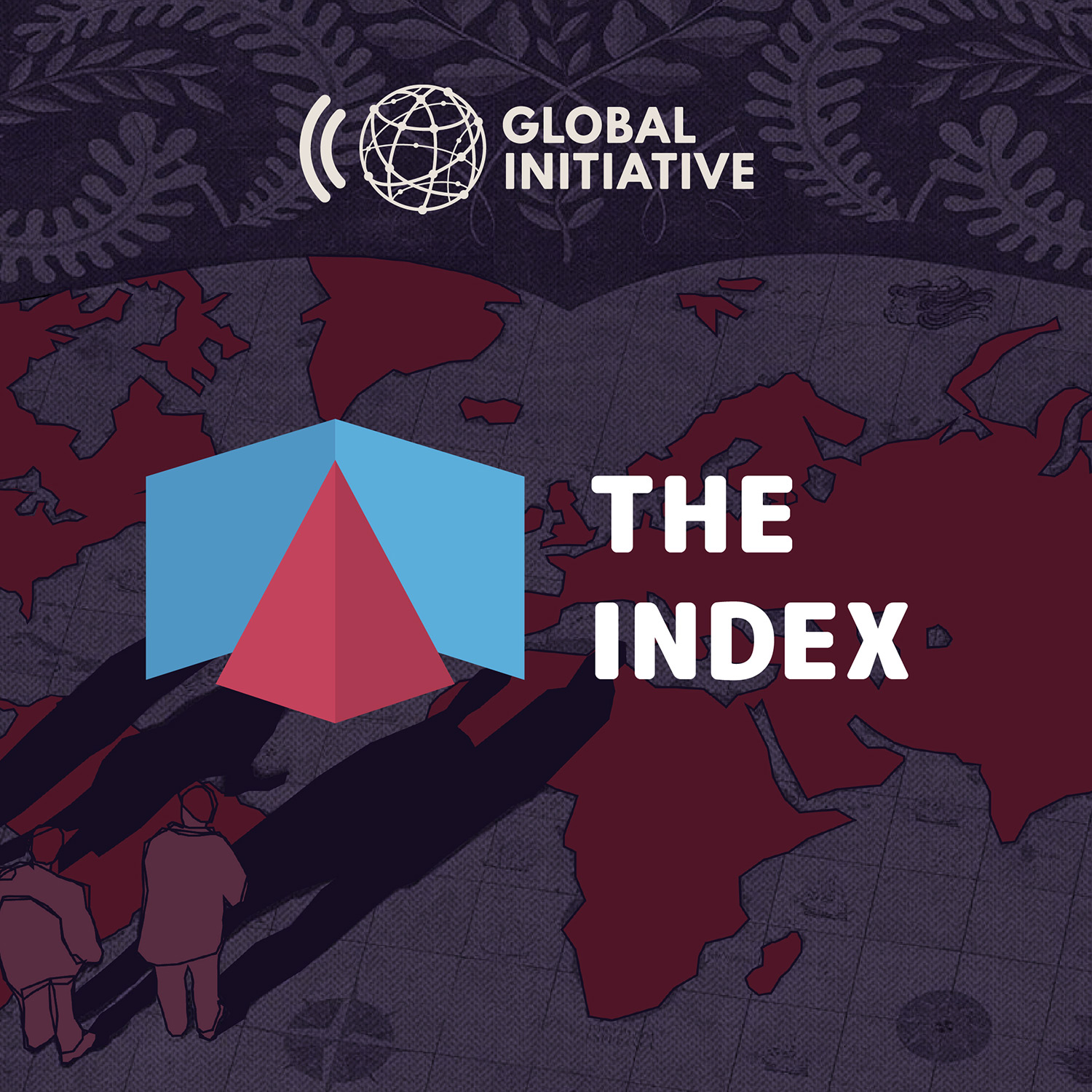
The Index Podcast
A deep dive into the Global Organized Crime Index
We're constantly working to improve the Index. By participating in this survey, you will be providing us with insights and suggestions that will help us make the Index an even better resource.

This project was funded in part by a grant from the United States Department of State. The opinions, findings and conclusions stated herein are those of the authors and do not necessarily reflect those of the United States Department of State.
ENACT is funded by the European Union and implemented by the Institute for Security Studies and INTERPOL, in affiliation with the Global Initiative Against Transnational Organized Crime.

